Open a Time Window.
When a festival, a national day or a turning point in nature arrives, a Time Window lights up on the calendar. Inside is a 30–60 second illustrated card, read aloud, and it is always about time. Your family’s birthdays and anniversaries are Special Days that you add, and the wall counts down to them with your child.
← Back to overviewDays worth opening.
Time Windows come from the world’s calendar: festivals and nature. Special Days come from your family’s calendar, added by parents. Parents choose which countries and cultures appear, and every festival card is reviewed by people from that culture. Cards cover time and custom only.
Time Windows · festivals
- Chinese New Year
- Mid-Autumn Festival
- Diwali
- Eid al-Fitr
- Christmas
- National and independence days
Special Days · your family
- Every child’s birthday
- First day of school
- Grandparents’ visit
- The day the holiday starts
- Family anniversaries
- Added by parents
Time Windows · nature
- Summer and winter solstice
- Spring and autumn equinox
- Full moon and new moon
- Leap day (29 February)
- New Year’s Day
- Changing seasons
Free: Time Windows for your country’s main festivals, and a Special Day for every child’s birthday. TIME BOX Plus: more countries and cultures, and deeper editions.
Five questions
about time.
Every window answers two or three of them. The questions stay the same; the answers deepen as children grow, from “how many sleeps until?” to “why does the date move every year?”
- How is the day decided: by the sun or the moon?
- How long until it comes?
- When in the day does it happen?
- How long ago did it begin?
- When will it come again?
“No lectures, only time: why this day sits where it does, and where it will be next.”
See one day answered
at every age.
The same day.
Three different answers.
Pick a day and see what it says to children aged 3–4, 5–6 and 7–9. Tap read-aloud to hear it.
Diwali
The festival of lights, which follows the moon. In 2026 it falls on 8 November.
How is the day decided? How long until it comes?
Diwali is a festival of lights. It comes on a very dark night, so families light lamps.
Diwali follows the moon. It comes on the darkest night, when there is no moon at all, so its date moves every year.
Diwali falls on a new moon in the Hindu lunar calendar. Twelve moons make about 354 days, around 11 fewer than a solar year, so the date moves around October and November.
Mid-Autumn Festival
The festival of the full moon, on the 15th day of the eighth lunar month.
How is the day decided? When in the day does it happen?
Mid-Autumn is the festival of the round moon. In the evening, families eat mooncakes and look up at the moon together.
It comes when the moon is full and round: the 15th day of the eighth month in the lunar calendar. The lunar calendar follows the moon, so the date changes every year.
Each lunar month begins at the new moon, so the 15th is close to a full moon. Twelve moon months are shorter than a solar year, so Mid-Autumn moves between September and early October.
A Birthday
Every child’s birthday is a Special Day, free.
How long until it comes? When will it come again?
Your birthday comes once every year. You are 4 now, and on your next birthday you’ll be 5!
A year is the time it takes Earth to travel all the way around the Sun. One trip, one birthday.
Earth takes about 365¼ days to go around the Sun. The extra quarter day adds up, so about every four years we add one more: 29 February, the leap day.
Winter Solstice
The shortest day of the year in the northern half of the world, around 21 December.
How is the day decided? When in the day does it happen?
Today is the shortest day of the year. It gets dark early, so the night is extra long.
From today, the days start getting longer again, a little bit each day.
Earth is tilted. In December the northern half leans away from the Sun, so the Sun stays low and the day is shortest around 21 December. In the southern half, it’s the longest day!
A small window.
A story about time.
Windows appear in the Month view weeks ahead, so children can watch them come closer and count the sleeps.
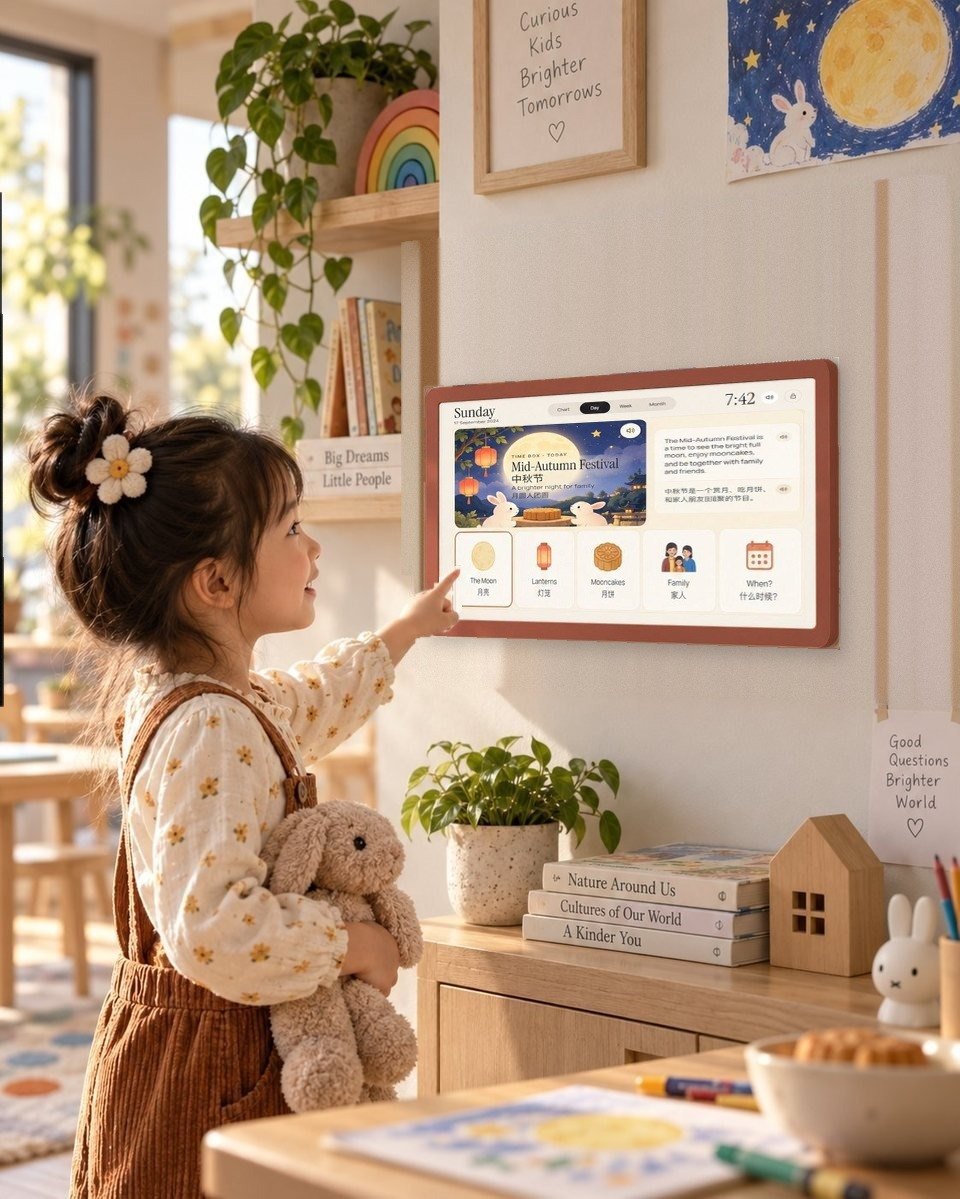
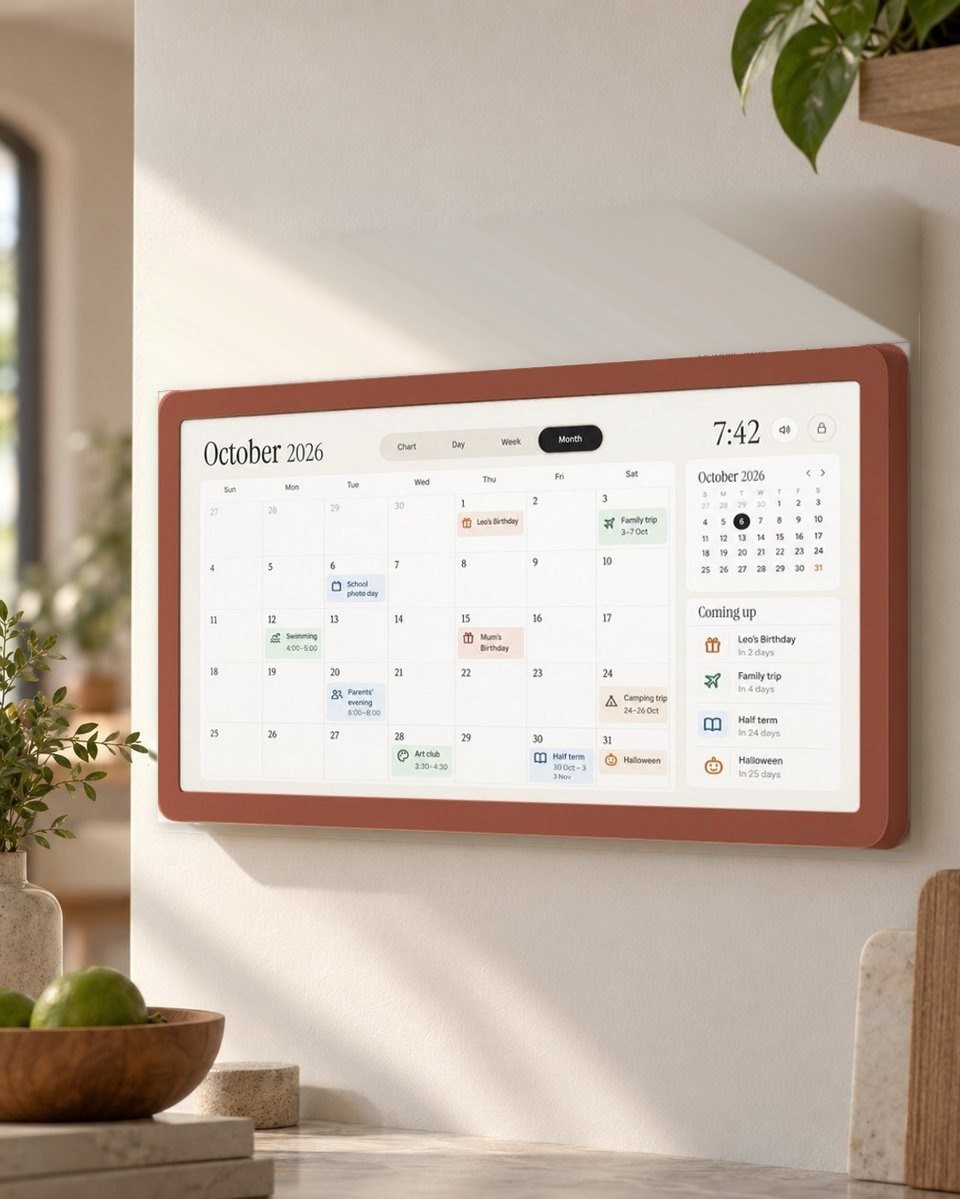
Renders of the CURI TIME BOX design.
Give your child
their own time.
Join the waiting list and we’ll tell you the day our Kickstarter goes live, with the $349 early-bird price held for you (30% off the expected $499 retail).